


NYC Intercom Law
Last updated September 2026 by the Douglas Security System team, licensed and insured NYC intercom specialists with over 35 years of experience.
If you own, manage, or sit on the board of an apartment building in New York City, the intercom isn’t optional in most cases. State law sets rules for entrance doors and intercoms in multiple dwellings, and the city’s Department of Housing Preservation and Development (HPD) enforces them.
This guide explains those rules in plain English, based on New York’s Multiple Dwelling Law section 50-a and HPD’s published guidance. Douglas Security System (DSS) has repaired and installed intercoms in NYC buildings for over 35 years, and these are the questions owners and tenants ask us most.
This page is general information, not legal advice. For questions about your specific building, check the law itself or talk to a lawyer or HPD.
The main rule is New York Multiple Dwelling Law section 50-a, titled “Entrances: doors, locks and intercommunication systems.” In plain terms, it has four parts:
If your building was built or converted to residential use after January 1, 1968, and has eight or more apartments, the intercom and the self-closing, self-locking entrance doors are required. There’s no tenant vote involved. The system must work for every apartment, and it must be kept in working order.
Buildings in this group with fewer than eight apartments still need the self-closing, self-locking entrance doors, even though the intercom requirement under section 50-a applies to buildings with eight or more apartments.
Many NYC apartment buildings are older than 1968. For these buildings, section 50-a works differently. The owner must install self-closing, self-locking entrance doors and an intercom when tenants occupying a majority of all the apartments in the building request or consent in writing.
Once that happens, the law sets timelines: installation must begin within 90 days of the tenants’ written consent and be completed within six months (one year for buildings owned by a municipal housing authority). For rent-controlled apartments, the local rent agency sets the terms for recovering the cost. If your pre-1968 building already has an intercom, it still needs to be maintained so it works properly.
Under section 50-a, the intercom has two jobs: two-way voice communication between each apartment and a person at the entrance door, and a way for the apartment occupant to release the door lock. In practice, that means:
An intercom that works in some apartments but not in others doesn’t meet the requirement for the apartments where it’s broken. A door that doesn’t close and lock on its own is also a problem, even if the intercom works. Audio-only systems meet the voice requirement. Video systems do too, and add a camera for security.
The intercom only works if the door does its part. For buildings covered by section 50-a, entrance doors must be self-closing and self-locking, and they must stay locked unless an attendant is on duty. Common problems we see include door closers that no longer pull the door shut, electric strikes that don’t release or don’t relock, and doors that have shifted in their frames. We repair and replace door strikes and entry hardware along with intercoms, so the whole entrance works together.
Most of these are straightforward repairs. We test the whole system, from the entrance to each apartment, so the fix holds.
HPD enforces the Housing Maintenance Code and related laws through inspections, which are often triggered by tenant complaints to 311. If an inspector finds a condition that violates the law, HPD issues a violation with a class that sets the deadline to fix it:
Broken intercoms and entrance door locks are typically treated as hazardous conditions. Owners must correct violations and certify the correction with HPD. HPD’s own guidance to owners is direct: to keep buildings secure, the owner, manager, or superintendent should immediately repair broken locks or intercoms. See HPD’s page on how to clear violations.
If your intercom is broken now, see our intercom repair NYC page. For typical prices, see our intercom system cost guide.
Start by reporting the problem to the super, managing agent, or owner in writing, and note the date. Most intercom problems get fixed once the owner knows about them. If the problem isn’t fixed in a reasonable time, tenants can file a complaint through NYC 311, which can lead to an HPD inspection. In pre-1968 buildings without an intercom, tenants occupying a majority of the apartments can request one in writing under section 50-a.
We repair and install intercoms and entrance door hardware in apartment buildings across Brooklyn, Manhattan, Queens, the Bronx, Staten Island, and Long Island. We can test your system, fix what’s broken, and document the repair for your records. When an upgrade makes more sense, we’ll show you options, including converting an audio intercom to video and systems with no monthly fee. Call (212) 262-2820 or visit us at 1541 E 46th Street, Brooklyn, NY 11234.
For class A multiple dwellings built or converted after January 1, 1968, Section 50-a of the Multiple Dwelling Law says every entrance from the street, a passageway, a court, a yard, or the cellar must have automatic self-closing and self-locking doors, kept locked at all times unless an attendant is on duty. An entrance that leads into a main entrance hall or lobby that already has automatic self-locking doors is an exception.
Roof doors are treated differently. An entrance from the roof must have a self-closing door that is not self-locking, fastened on the inside with bolts, hooks, or a lock that doesn’t need a key to open from inside the building. The intercom itself must be located at the automatic self-locking door that gives public access to the main entrance hall or lobby.
If any answer is no, fix the door or the intercom before it turns into a complaint or a violation.
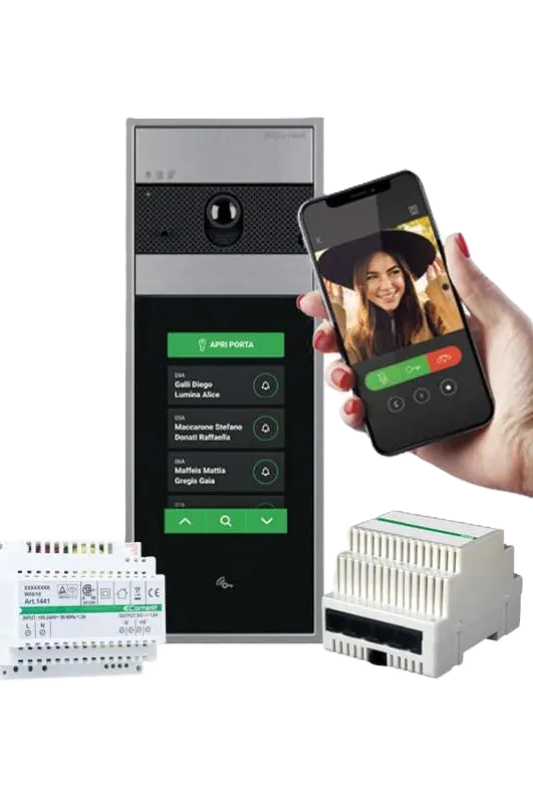
Section 50-a describes a device or devices for voice communication between the occupant of each apartment and a person at the entrance, and a way for the occupant to release the door lock from the apartment. It doesn’t mention phone apps. Many buildings now use app-based systems, and many keep apartment stations as well. If you’re thinking about removing apartment stations and relying only on phones, talk to your attorney or check with HPD first, and plan for tenants who don’t have smartphones. A video entrance panel that still rings in each apartment avoids the question entirely.
Compliance isn’t a one-time job. Doors get slammed, closers wear out, and wiring degrades. A simple routine helps:
Yes, for class A multiple dwellings built or converted after January 1, 1968, with eight or more apartments. Buildings built before 1968 must install one when tenants occupying a majority of the apartments request or consent in writing.
New York Multiple Dwelling Law section 50-a, titled “Entrances: doors, locks and intercommunication systems.” HPD enforces housing conditions in NYC buildings.
It must allow voice communication between each apartment and a person at the main entrance door, and it must let the apartment occupant release the door lock from the apartment.
Entrances to class A multiple dwellings built or converted after January 1, 1968, must have automatic self-closing and self-locking doors, kept locked except when an attendant is on duty. Older buildings must add them when a majority of tenants request or consent in writing.
The intercom requirement in section 50-a applies to buildings with eight or more apartments. Smaller buildings covered by the law still need self-closing, self-locking entrance doors.
Yes. In buildings erected before January 1, 1968, the owner must install one when tenants occupying a majority of the apartments request or consent in writing. Work must begin within 90 days and be completed within six months.
It depends on the class: 90 days for Class A, 30 days for Class B, and generally 24 hours for Class C, with different timelines for certain conditions.
Yes. A video intercom provides two-way voice communication and door release from each apartment, and it adds a camera for security.
Report it to the super, managing agent, or owner in writing. If it isn’t fixed in a reasonable time, tenants can file a complaint with NYC 311.
No. This page is general information based on the Multiple Dwelling Law and HPD guidance. For questions about a specific building, check the law or consult a lawyer or HPD.
No. Under Section 50-a, a roof entrance must have a self-closing door that is not self-locking, fastened on the inside with bolts, hooks, or a lock that doesn’t need a key to open from inside.
The law describes a device for voice communication and door release from each apartment and doesn’t mention apps. Before removing apartment stations, talk to your attorney or check with HPD, and plan for tenants without smartphones.