


Video Intercom Upgrade
Last updated October 2026 by the Douglas Security System team, licensed and insured NYC intercom specialists with over 35 years of experience.
Thousands of NYC buildings still run audio-only intercoms. They work, but tenants can’t see who they’re buzzing in. Also, the systems get older every year. The good news is that going to video doesn’t always mean ripping everything out.
Douglas Security System (DSS) converts audio intercoms to video in apartment buildings, co-ops, condos, offices, and private houses. In many buildings, our Comelit video intercom works alongside your existing intercom units. So tenants keep their apartment units and can also see and answer visitors on their cellphones. We’ve been doing this work in New York for over 35 years. Call (212) 262-2820 for a free inspection.
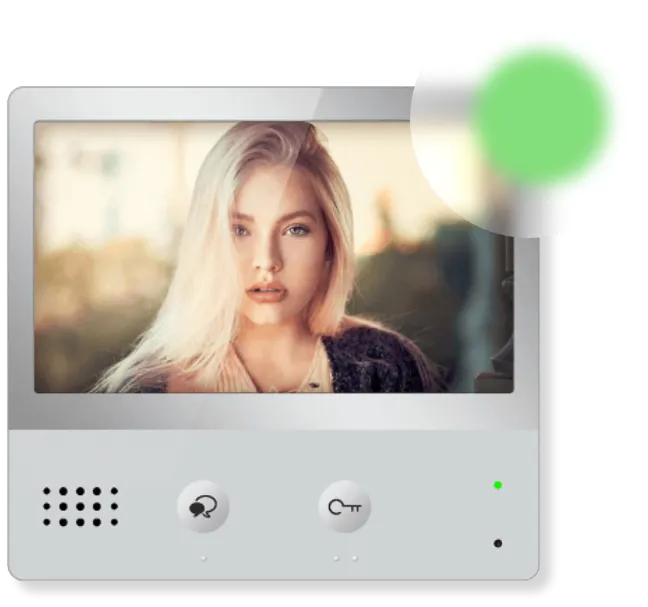
These signs usually mean it’s time to move from audio to video:
If two or more of these apply, an upgrade is worth pricing out.
| Feature | Audio intercom | Video intercom |
|---|---|---|
| Talk to visitors | Yes | Yes |
| See visitors before buzzing them in | No | Yes |
| Answer from a phone | Usually no | Yes, with app-enabled systems |
| PIN codes and key fobs | Sometimes, with add-ons | Often built in |
| Temporary codes for deliveries | No | Yes, on many systems |
| Tenant directory at the entrance | Button list | Touch screen or scrolling directory |
| Typical cost, small building | About $2,200 to $3,500 | About $4,000 to $5,000+ |
| Meets NYC voice and door release rules | Yes | Yes |
Costs are average NYC prices for a small building with one entrance.
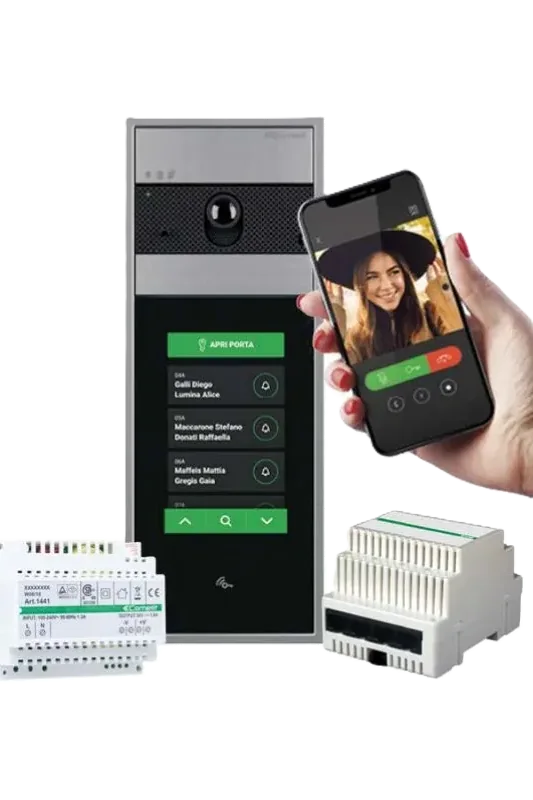
Often, yes. Whether you can reuse the wiring depends on two things: the type of wiring and its condition.
First, during the inspection, we test the wiring from the entrance to the apartments. If it’s in good shape, we reuse it. If only some runs are damaged, we replace just those runs. Either way, you’ll know before you commit.
Most audio-to-video upgrades fall into one of three approaches:
1. New video entrance panel, keep the apartment units, add phone access. First, we replace the lobby panel with a video panel like the Comelit Ultra Touch. Then we add a gateway so tenants can answer on their phones. The existing apartment units keep working. This is usually the least disruptive and most cost-effective option.
2. New video entrance panel and new video apartment stations. Every apartment gets a video monitor. This gives the best in-home experience. However, it means work inside each apartment, so it costs more and takes longer.
3. A full IP or cloud-based system. This is a networked system with new cabling. It offers the most remote-management features. Still, it usually costs the most, and some platforms carry ongoing fees.
We’ll walk you through the trade-offs for your building. We’ll also give you prices for the options that fit.
Cost depends on which option you choose, the number of apartments and entrances, and the condition of the wiring. As a rough guide, a video intercom for a small building with one entrance typically costs about $4,000 to $5,000 or more. Video usually adds 15% to 40% over the price of an audio system of the same size. However, keeping your existing apartment units and wiring can bring the cost down a lot.
These are average NYC prices, so they are not a fixed price list. For a full breakdown, see our intercom system cost NYC guide. Our Comelit systems are also a one-time investment with no monthly payment. Read more about no monthly fee intercom systems.
Start with an inspection, because the wiring and door hardware decide which options are realistic. From there:
Upgrades that keep the existing apartment units are usually the fastest and least disruptive.
Most upgrades happen in occupied buildings, so we plan around your tenants. We prepare the new equipment before we take the old panel down. As a result, the entrance is without an intercom for as little time as possible. For projects that need work inside apartments, we schedule visits in blocks and coordinate access with the super or managing agent. If the old system is still working, it stays in service until the new one is ready.
Many NYC buildings have entrances worth protecting, such as original stone, brass, or ironwork. We choose panel sizes and finishes that fit. We also try to reuse existing openings instead of cutting new ones. Surface-mount and flush-mount options give you flexibility.
If your building is a designated landmark or in a historic district, exterior changes may need approval from the NYC Landmarks Preservation Commission. Check with your managing agent or architect before the work starts. Then we’ll plan the installation around any requirements.
First, when we upgrade, we remove the old entrance panel and any equipment we replace. If you’re keeping working apartment units, we leave them in place. Next, we clean up and patch the entrance so the new panel looks finished. Would you like to keep old parts as spares for other buildings you manage? Just tell us before the work starts.
For most audio-to-video conversions, we recommend Comelit. It can work alongside existing intercom units, and it has no monthly fee. The Comelit Ultra Touch VIP Kit bundles the entrance panel, power supply, and gateway. For large multi-tenant buildings, the Aiphone GT Series is also a strong option. If you want cloud access and facial recognition, we install the DNAKE S617 as well. Before you choose, we also explain any ongoing costs.
Planning a brand-new system instead? See video intercom installation in NYC.
We work across Brooklyn, Manhattan, Queens, the Bronx, Staten Island, and Long Island. If your audio intercom is broken right now, see our intercom repair NYC page.
Learn more about DSS or see what we do on our services page.
We can only give you an exact price once we inspect the work. Every building is different. The price depends on the number of apartments and entrances, the age and condition of the wiring, the door hardware, and the equipment you choose. Two buildings with the same number of apartments can need very different work. So a price given over the phone would be a guess.
That’s why every job starts the same way:
The price ranges on this site are average NYC prices from published installer pricing. They give you a starting point, but they are not a DSS price list. Call (212) 262-2820 to schedule an inspection.
In many buildings, yes. Our Comelit video intercom works alongside your existing intercom units, so we often reuse the wiring and replace only damaged runs. Old audio systems run cable from the entrance panel up through the building to each apartment. Opening plaster and walls in older buildings is slow and messy, so reusing sound cable saves labor. During the inspection we test each run to see which ones are still good.
Not always. With a Comelit upgrade, tenants can keep their existing apartment units and also answer the door on their phones. Replacing units with video monitors is an option if you want video in every apartment. The trade-off is simple: keeping units costs less and means no one needs to let a technician into their apartment, while monitors give every household a picture on a wall screen, including people without smartphones.
A video intercom for a small building with one entrance typically costs about $4,000 to $5,000 or more. Keeping existing units and wiring can lower the cost. These are average NYC prices, and we give you a free quote. The final number moves with the count of apartments and entrances, the door hardware, and how many wiring runs need replacing, which is why the exact figure comes only after an inspection.
It depends on the building and the option you choose. Upgrades that keep the apartment units are usually the fastest. We give you a schedule with your quote. Time goes mostly into the number of entrances, how many apartments need new monitors, and whether old cable has to be replaced. Swapping the entrance panel and adding the app side is quicker than opening hallways to run new wire to every floor.
Only briefly. We prepare the new equipment first and keep the old system running until the new one is ready, so the entrance is without an intercom for as little time as possible. The switch itself is the short part: we connect the new panel, test the door release and the call to each apartment, then confirm the system works. Tenants with keys can still get in during the changeover.
There is no monthly fee on the Comelit systems we install. You pay once for the equipment and installation. Property management software and call-log servers are available as optional extras, sold separately. Those suit larger buildings where a manager wants a record of which apartment was called and when. A small building that only needs visitors to ring tenants and be let in can skip them.
Yes. PIN code entry, key fobs, and temporary access codes can be set up as part of the new system. A fob is a small tag that opens the door when held to a reader, and it can be switched off if someone loses it, which a metal key cannot. Temporary codes suit deliveries, cleaners, or contractors, because you can give out a code instead of copying a key.
We test it during the inspection. If some runs are damaged, we replace only those runs and tell you the cost before you commit. Old buildings often have cable that was spliced over the years, painted over, or chewed by rodents, and a single bad run can silence one line of apartments. Testing each riser shows whether the fault is local or the whole cable is tired. Average wiring repairs in older buildings run $1,000 to $3,000, not a fixed price.
Often, yes. We choose panels and finishes that fit the entrance. Exterior changes on designated landmarks may need approval from the NYC Landmarks Preservation Commission, so check before the work starts. Changes to doors, frames, and facade-mounted equipment are what the commission usually reviews, while interior work usually is not covered. Slim panels in a finish that matches the door hardware may be easier to approve, and the filing should happen before anything is drilled.
Both let tenants talk to visitors and release the door. Video adds a camera, so tenants can see who’s at the door, and many video systems add phone access, PIN codes, and temporary access codes. The practical gain is screening: a tenant can spot a stranger or a delivery before pressing the button, instead of buzzing in anyone who sounds confident. Video costs roughly 15 to 40 percent more than audio, on average.
Yes, because the rule is about function, not about a camera or its absence. A video intercom provides two-way voice communication and door release from each apartment, which is what NYC’s intercom rules require. Under Multiple Dwelling Law section 50-a, that applies to class A buildings with 8 or more apartments built or converted after January 1, 1968. Learn more on our NYC intercom requirements page.
On Comelit video intercom installs, we offer a 3-year guarantee on Comelit material and a 1-year guarantee on service and labor. The two terms differ because equipment and workmanship fail for different reasons: a faulty component can show up years later, while a loose connection or bad splice usually appears soon after installation. Keep your written quote and invoice together, since they document what was installed and when.
Each tenant who wants phone access gets an invitation with instructions. They download the app, sign in, and link it to their apartment. We help anyone who needs it. Once linked, the phone rings when a visitor calls that apartment, and the tenant can talk and open the door from anywhere with a data or Wi-Fi connection. Tenants who prefer not to use a phone can keep answering on the unit in the apartment.
Yes, we do. For a house, we replace an old buzzer or audio door station with a video door station, an indoor monitor, and app access, often using the existing wire. Reusing the wire matters in a finished house, since it avoids opening walls between the front door and the kitchen or hall. Average cost for a video door station for a house is $700 to $1,600, not a fixed price.
Usually the new entrance panel replaces the old one, but working apartment units can stay in place and keep working alongside the new system. Tell us if you want to keep spare parts. Running two panels at one entrance rarely makes sense, because visitors would not know which to use and the old panel would add a second point of failure. Kept units still answer calls in the apartment.
We can share average NYC price ranges over the phone, but we can only quote an exact price after we inspect the work. The price depends on the number of apartments and entrances, the condition of the wiring, the door hardware, and the equipment you choose. Two buildings with the same apartment count can still differ widely once the wiring is tested. After the inspection comes a free written quote, and nothing starts until you approve it.